
Lets Stop Treating Negotiation as One Big Thing

I know I am going to sound like a broken record, but I am continually bothered by the way we lump negotiation into one giant category and make quick judgements about people’s ability to negotiate. Even worse, we accept anyone who calls themselves a “negotiation expert” without ever asking which field of negotiation they specialise in.
It is like calling someone a “doctor” without knowing whether they are a surgeon, a paediatrician, or a dermatologist.
I meet people all the time who tell me, quite confidently, that they hate negotiating. They would rather avoid it completely. Studies even show that seasoned negotiators, when given the option, sometimes choose not to negotiate at all. I get it. Recently in Los Angeles, we had an issue with a car rental company that had given us the wrong car. I had just travelled for twelve hours. It was early morning. My family was tired. The last thing I wanted was to be pulled into a negotiation, especially with an audience that mattered to me.
But whether we love it or hate it, to fact is that we all negotiate every day. Several times a day. Often without noticing.
Research suggests the number sits somewhere between eight and ten daily negotiations. Most of them are informal. Most of them give us no time to prepare. They happen in real time, in imperfect moments, when we are distracted, emotional, tired, or under pressure. If that is the reality, then the idea that we should only prepare before a negotiation is flawed. We need a baseline level of readiness.
This is how negotiation should be for leaders. Not a performance is switched on in a boardroom, but a way of engaging with people. A daily discipline that sharpens awareness, emotional intelligence, and the ability to respond rather than react.
This is why I am never satisfied when people tell me they hate negotiating.
Negotiation is a fundamental leadership skill. When used well, it creates clarity, alignment, stronger relationships, and outcomes that make life and work better for everyone involved.
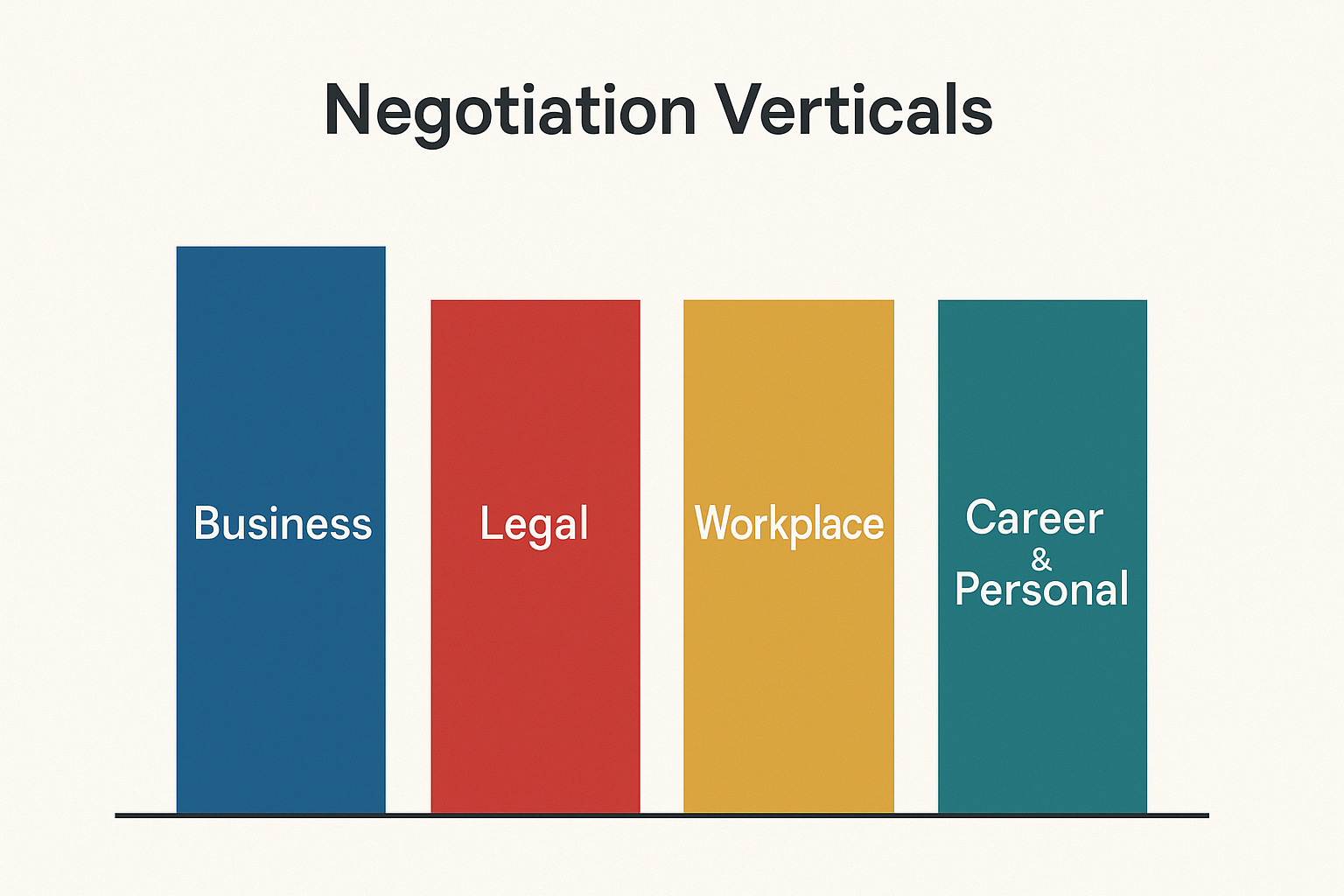
Which brings me back to the core point. Negotiation is not one thing. It is an ecosystem of different verticals.
Once you see this, everything starts to make more sense. Here ar just some of the verticals that exist in the broad field of negotiation, so before you tell yourself you hate to negotiate ask youself which vertical you hate most!!
Business Negotiations
Commercial deals
Procurement
Contract drafting and renegotiation
Sales and pricing conversations
Vendor management
Partnership and alliance building
Investment terms
Licensing agreements
Mergers and acquisitions
Board-level decisions
Media and PR negotiations
Client renewals and changes to scop
Legal Negotiations
Settlement agreements
Dispute resolution
Arbitration and mediation
Litigation strategy
Intellectual property matters
Regulatory discussions
Insurance claims
Due diligence processes
Employment law conversations
Workplace Negotiations
Role clarity
Budget allocation
Project ownership
Cross-functional alignment
Workload disputes
Performance expectations
Feedback conversations
Escalation pathways
Conflict resolution
Team norms and operating agreements
Career and Personal Negotiations
Salary and compensation
Promotion pathways
Work-life boundaries
Career transitions
Mentoring and sponsorship
Daily disagreements
Family decisions
Holiday planning
Co-parenting logistics
Household responsibilities
Across all these areas, the fundamentals are the same. Effective negotiation requires a clear understanding of incentives, an ability to manage emotions, and the discipline to separate fact from story. It depends on trust, on clear communication, and on a mindset that is willing to explore rather than defend. These principles sit underneath every negotiation, regardless of the context.
So next time before you say you “hate” negotiating, take a look at this list and ask yourself which vertical are you referring to.